Whether you are eyeing a shady corner of your property or a spare room with some shelving, the choice between outdoor and indoor mushroom production shapes everything from species selection to how much monitoring you will do every week. Neither path is universally better. They just ask different things of the grower.
Four Steps That Apply to Both Systems
Regardless of where or how you grow, mushroom cultivation follows the same four-stage sequence. Understanding each stage first makes the outdoor-versus-indoor comparison much easier to follow.
Substrate and Spawn
The substrate is whatever material feeds and supports the mycelium. Common options include logs, stumps, woodchips, straw, sawdust, coffee grounds, and grain hulls. Some species are selective about substrate composition; others tolerate a wider range. Spawn is intentionally cultivated mycelium from a known species, isolated under sterile conditions to keep contaminants out. For most growers, spawn is sourced from a supplier, much the way a vegetable farmer sources seed.
Inoculation
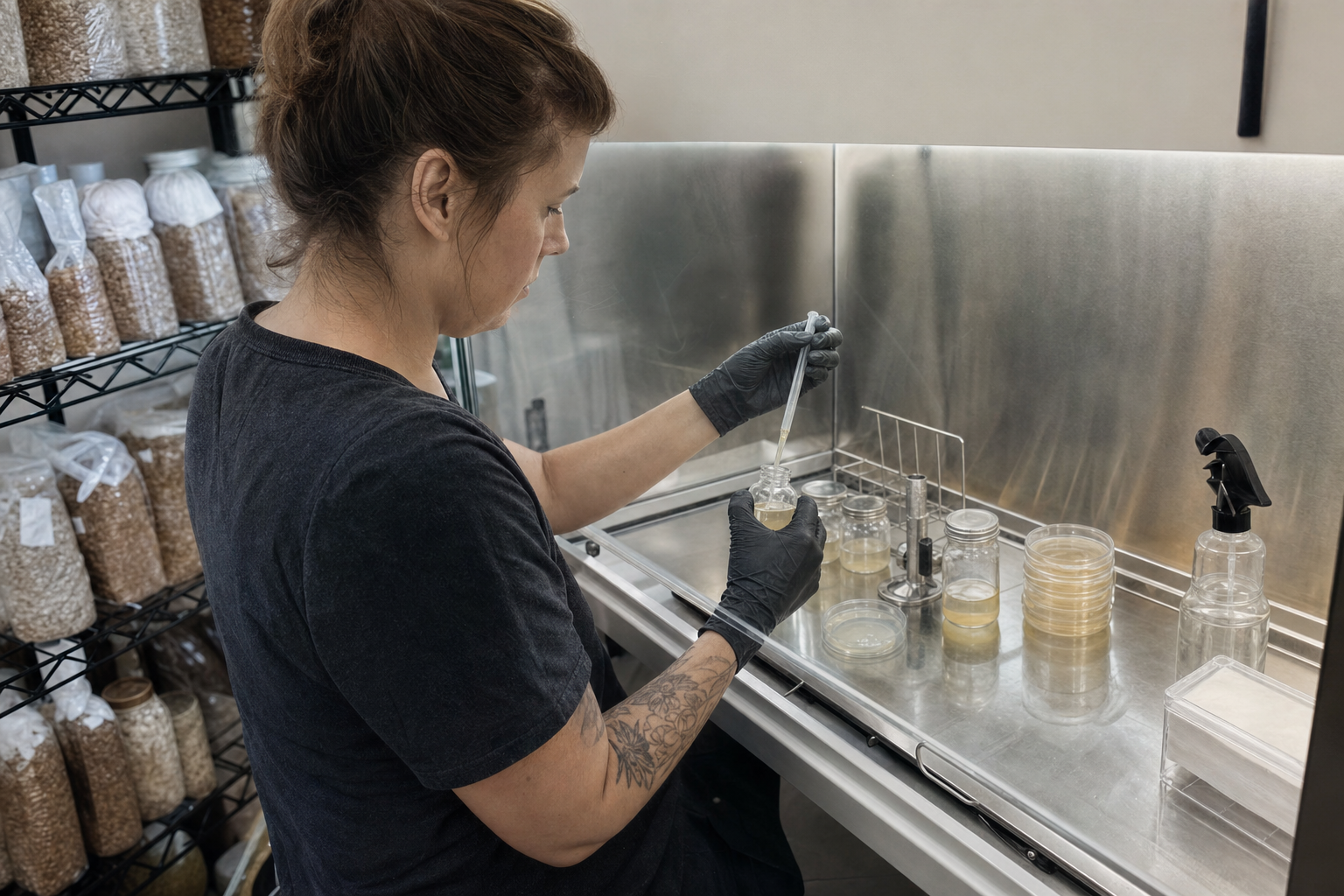
Inoculation brings spawn into contact with the substrate to start colonization. The approach depends on the material. Logs are typically drilled or wedge-cut; bags and containers are packed with an even mix of spawn and substrate. Outdoor inoculation is generally more forgiving of ambient contaminants. Indoor inoculation usually requires the substrate to be cleaned first, through heat, steam, or another method, and then introduced to spawn in a clean working space.
Spawn Run and Incubation
After inoculation the mycelium needs time to colonize the full volume of substrate. How long that takes varies by species and substrate density. Oyster colonizes quickly; shiitake moves more slowly. As a general reference, logs and stumps can take six to eighteen months, woodchips two to six months, and straw or sawdust as little as three to four weeks.
Faster colonization on fine substrates does come with a trade-off: a shorter production window. Sawdust and straw systems tend to produce for four to eight weeks, while logs can fruit reliably for three years or more.
Outdoor systems need little attention during this phase as long as logs stay shaded. Indoor systems require a consistent temperature, typically in the sixty-five to seventy degree Fahrenheit range, and regular monitoring for mold contamination.
Fruiting and Harvest
Once the mycelium has fully colonized the substrate, fruiting can begin. Maintaining the right combination of temperature, light, humidity, and airflow is what drives a good flush. In outdoor settings, monitoring is largely about keeping insects, slugs, and other pests away from the harvest. Indoors, those same environmental parameters need active management.
Some substrates can be prompted to fruit on cue. Shiitake logs, for instance, can be soaked in water for twelve to twenty-four hours to trigger fruiting. Most indoor setups fruit spontaneously. After a harvest the substrate rests, then a second and often a third flush follows, typically spaced several weeks apart.
Growing Outdoors: Working with the Environment
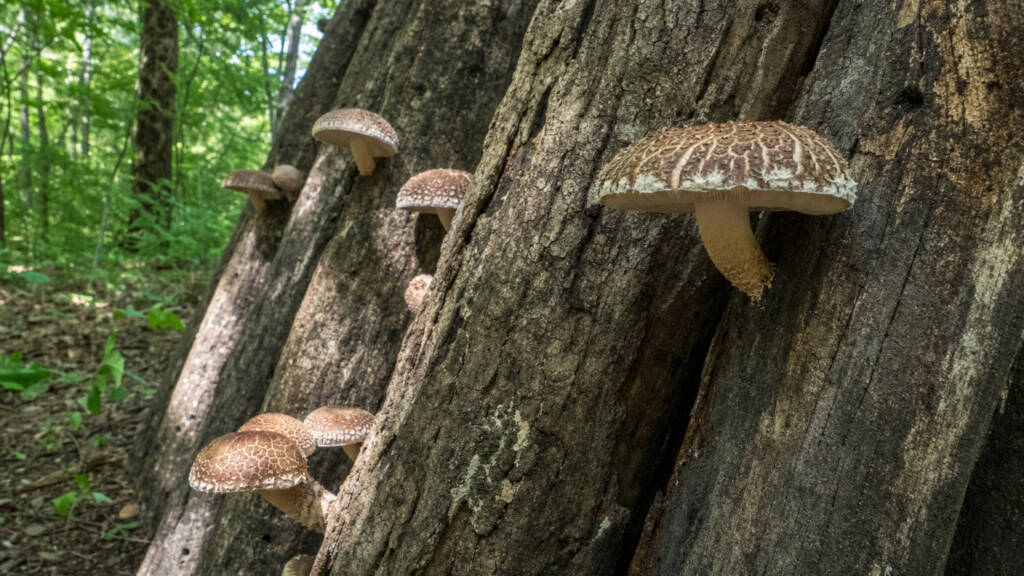
Outdoor cultivation has a straightforward appeal. A shaded area with decent humidity and airflow naturally approximates the conditions most gourmet species evolved in. No climate control hardware, no environmental sensors, no tight sterility protocols during inoculation.
Species that have shown success outdoors include log-grown shiitake, lion’s mane, oyster, and wine cap stropharia, along with a few others. The practical limitation is consistency. Out of that group, log-grown shiitake is the one species that can reliably be nudged to fruit on a predictable schedule, using the forced-fruiting soak method described above. Cornell research in Central New York found this method can support consistent production from roughly the first week of June through mid to late October. That is a regional, historically documented observation, not a universal guarantee.
The other outdoor-viable species fruit on their own schedule. If the goal is a steady weekly supply for a market table, that unpredictability is a real constraint.
Growing Indoors: More Species, More Variables
Moving production inside substantially expands the list of species a grower can work with. The trade-off is that you take on responsibility for every environmental variable the outdoor environment previously handled for free.
Contamination Is the Central Challenge
The biggest practical difference between outdoor and indoor growing is contamination pressure. Outdoors, it is much lower. Indoors, molds and other contaminants can move through a batch before the desired mycelium gets a foothold. Substrate preparation and clean inoculation practices are not optional steps; they are what determine whether a batch fruits or fails. This is one of the reasons starting with species that are well-matched to your setup matters so much early on.
Infrastructure Flexibility
One underappreciated advantage of indoor mushroom production is how little specialized infrastructure it actually requires compared to other controlled-environment agriculture categories. Barns, outbuildings, high tunnels, and storage facilities on rural properties have been adapted successfully. Urban growers have used basements, shipping containers, and warehouse spaces. The input requirements for starting production are generally lower than for hydroponic or greenhouse systems, though temperature, humidity, light, and fresh air exchange still need to be addressed.
Thinking Through the Decision
Neither system is a shortcut. Outdoor growing trades active environmental management for a narrower species list and weather dependency. Indoor growing offers more species options and year-round potential, but it demands consistent attention to contamination control and environmental conditions throughout every stage.
The honest starting point is matching the system to what you actually have: available space, time, and which species you want to grow. That fit matters more than any abstract ranking of one method over the other.

Add Comment