Most people meet oyster mushrooms as a pale grey cluster in a grocery store, so the first time they see a pink or golden oyster fruiting from a bag it feels like a different mushroom altogether. In a sense it is. Blue, pink and golden oysters all belong to the genus Pleurotus, but they are separate species or varieties with their own temperature ranges, growth speed and handling needs. Picking the right one for your space can be the difference between a heavy first flush and a bag that sits there doing very little.
This guide walks through what sets each color apart, what they share, and how to decide which one belongs in your grow area this season.
Blue oyster: the cool-weather workhorse
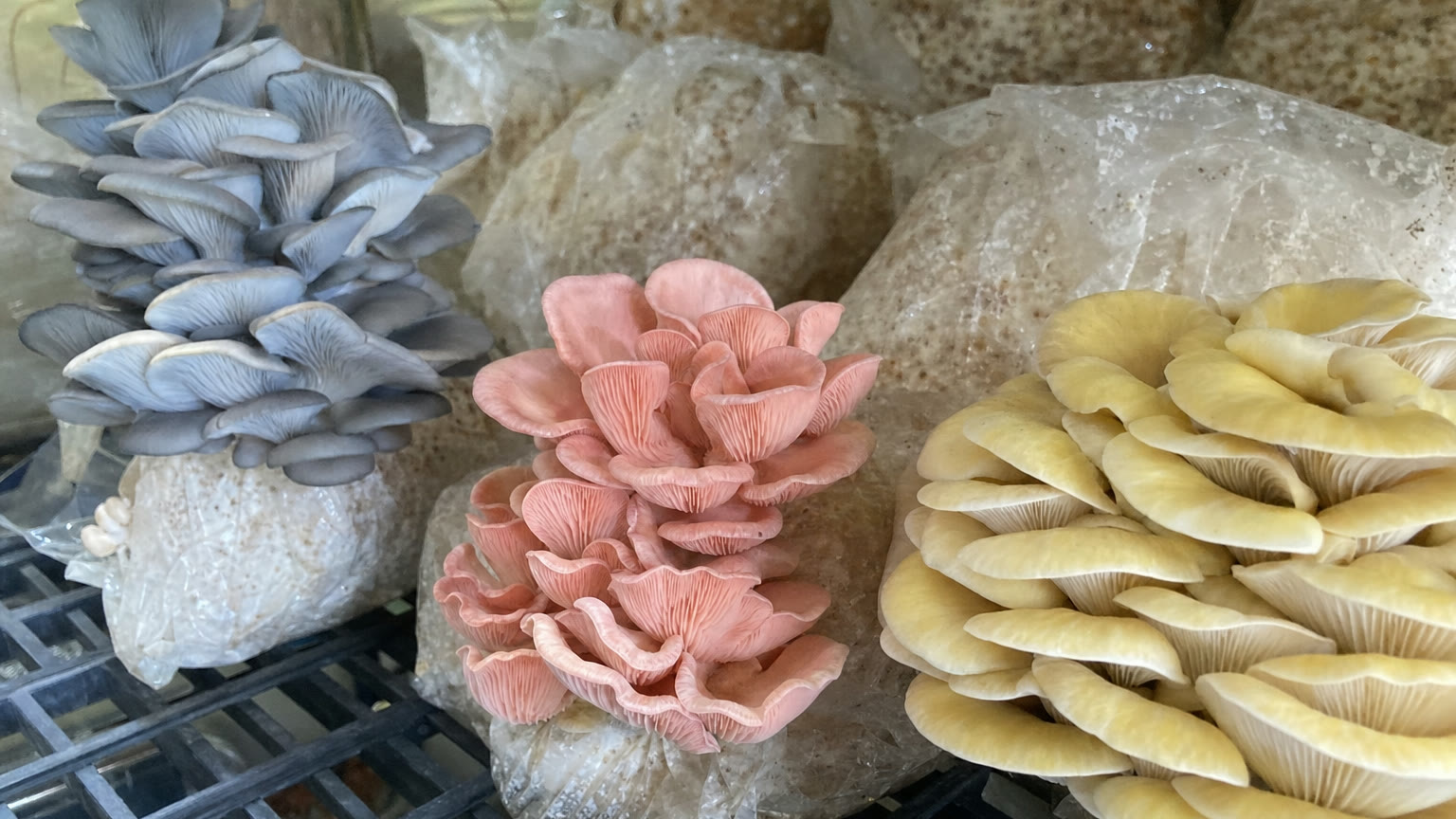
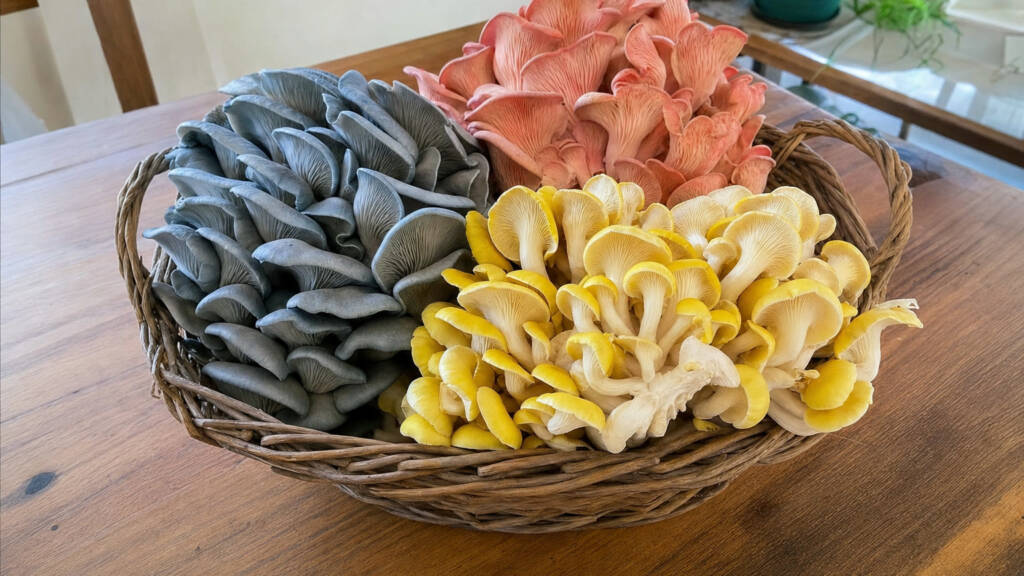
Blue oyster is a variety of Pleurotus ostreatus, the same species as the common grey oyster. Young clusters come in a deep slate blue, and the color softens to grey as the caps expand. That fading is normal and tells you nothing bad about the crop. It simply means the mushrooms are maturing.
Blue oyster prefers cooler fruiting conditions, roughly the mid-50s to mid-60s Fahrenheit. That makes it a natural fit for basements, garages in spring and fall, and any room that never gets warm. In those conditions it forms thick, dense clusters with firm caps, and it tends to hold up well in the refrigerator for several days after harvest. If your space runs cool for most of the year, blue oyster is usually the most forgiving place to start.
When blue oyster is kept too warm, it still fruits, but the caps grow thinner and the clusters mature faster than you can keep up with. Growers in warm climates often have better luck switching to one of the warm-weather colors during summer.
Pink oyster: fast, bright and built for heat
Pink oyster is Pleurotus djamor, a tropical species. It wants warmth, roughly the 70s into the low 80s Fahrenheit, and it moves quickly. A healthy block can go from first pins to harvest in only a few days, and the clusters form frilly, ruffled caps in a strong salmon pink.
That speed is the main appeal and also the main challenge. Pink oysters go from perfect to overripe fast, so check them at least twice a day once pins appear. They also have a short shelf life and do not like cold. Unlike most mushrooms, pink oysters can turn limp and lose quality in a cold refrigerator, so plan to cook them within a day or two of picking. The color fades to a light tan once they hit the pan, which surprises some first-time growers but is entirely expected.
If your grow space sits warm in summer and you want quick results, pink oyster is hard to beat. In a cold room it will stall, so match the species to the season.
Golden oyster: delicate clusters with a nutty character
Golden oyster is Pleurotus citrinopileatus. It produces bunches of small, bright yellow caps on thin stems, and many cooks describe its flavor as nutty compared with blue oyster. Like pink oyster, it prefers warm conditions, roughly the mid-60s to low 80s Fahrenheit.
Golden oysters are fragile. The caps are thin and break easily, so harvest the whole cluster by twisting or cutting at the base rather than pulling individual mushrooms. They also lose their bright color and firmness quickly, which is one reason you rarely see them in stores. Home growers get to enjoy them at their best, a few hours after harvest.
One responsible-growing note: golden oyster has established itself in the wild in parts of North America outside its native range. Growing it indoors and composting spent blocks thoroughly, rather than dumping them in the woods, is a simple way to keep your hobby contained.
What all three colors have in common
Underneath the color differences, the three behave like oysters. All of them colonize quickly, which helps them outcompete contaminants. All of them grow well on pasteurized straw or on hardwood sawdust blocks, and many growers use either depending on what is easy to source. And all of them need plenty of fresh air during fruiting.
Fresh air exchange is the setting new growers most often underestimate. Oysters respond to high carbon dioxide by stretching out long stems and producing small caps, as if they are reaching for open air. If your clusters look like a bunch of skinny trumpets, add more ventilation before you change anything else. Humidity matters too. Aim for a consistently humid environment, typically in the high 80s to 90s percent, without letting water pool on the caps.
Oysters also release a lot of spores once caps flatten. Harvesting a little early, while cap edges still curl slightly downward, keeps spore load down and gives you better texture in the kitchen.
Common problems by color
Each color tends to show its own warning signs when conditions drift. Blue oyster grown too warm produces thin, fast caps that curl upward and drop spores early. If that happens every flush, the room is likely too warm for it, and a warm-weather color will do better there. Blue oyster kept too dry develops cracked cap surfaces and small, stunted clusters.
Pink oyster stalls in the cold. A block that colonized well but never pins in a cool room is usually telling you it needs more warmth, not more water. Pink oyster also forms tight balls of pins that never open when fresh air is too low, so ventilation is the first thing to check.
Golden oyster is the most sensitive to dry air. Its thin caps can yellow unevenly, crisp at the edges or stop growing if humidity drops for even part of a day. Gentle, frequent misting around the block, rather than directly onto the caps, keeps it on track. For all three, a sudden change in temperature or humidity is often the trigger for aborted pins, so steady conditions matter more than perfect ones.
Choosing the right color for your space
The simplest way to choose is to start with your temperature, not your favorite color. Take a few readings in your grow area at different times of day. If it sits in the 50s and low 60s, start with blue oyster. If it runs in the 70s or warmer, pink or golden will fruit far more willingly. Many growers rotate through the year, running blue oyster through the cooler months and switching to pink or golden when summer arrives.
Think about how you plan to use the harvest as well. Blue oyster stores best, so it suits growers who harvest in batches. Pink and golden reward people who can cook within a day and enjoy something that looks striking on the plate.
Whichever you choose, follow the strain notes that come with your culture, since individual strains vary in their exact range. If you are just getting set up, our beginner mushroom growing guide covers the basics of substrate, colonization and fruiting that apply to every oyster on this list. When you know which color fits your space, Shop cultures and spawn to get started.


Add Comment