Mushroom cultivation starts with understanding your culture, your substrate, and the conditions each stage needs. For home growers and small farms, separating culture production from spawn production and fruiting makes the process easier to follow. Here are the fundamentals.
Liquid Culture: The Foundation
Liquid culture is one way to introduce mushroom mycelium to a suitable growing medium. Growers can also begin with purchased grain spawn or ready-to-fruit blocks, depending on which stages they want to handle themselves.
Why Agar Checks Matter
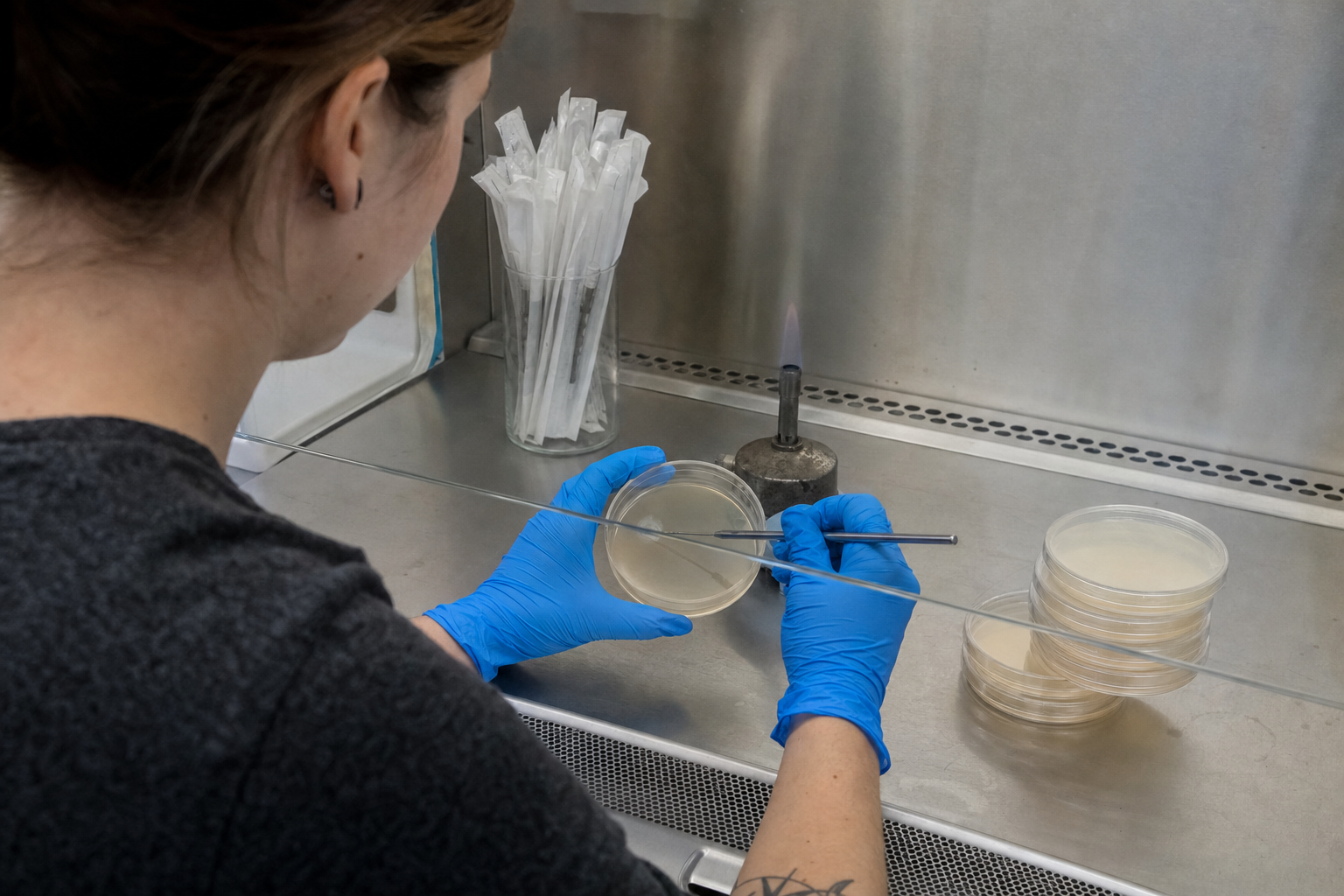
Agar plates provide a surface for observing culture growth and checking for competing organisms before expanding a culture. These checks support a cleaner process; they do not guarantee that every later transfer will remain contamination-free.
Grain Spawn: Taking the Next Step
After agar verification, liquid culture inoculates sterilized grain. Grain spawn expands your mycelium and gets you ready to scale up.
Fruiting Blocks and Incubation
Grain spawn is used to inoculate fruiting substrate blocks. These incubate in a controlled environment to give the mycelium a head start before fruiting conditions.
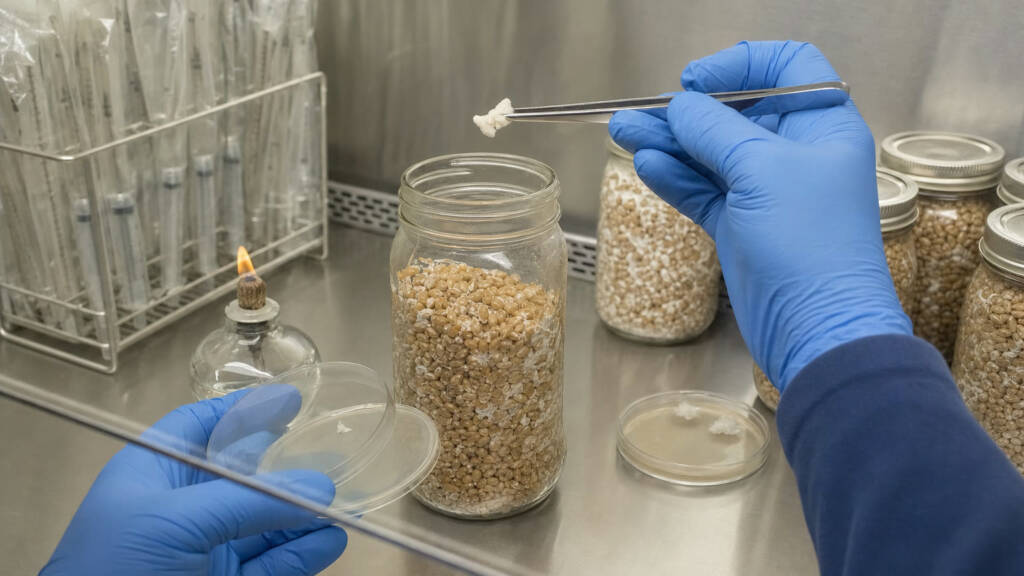
Clean Transfers and Sterile Techniques
Culture and spawn production require careful handling and contamination control. Clean transfer techniques help reduce the chance of introducing competing organisms when moving cultures between growing media.
Oyster and Lion’s Mane: Applied Cultivation
Oyster and lion’s mane mushrooms have different cultivation needs. Follow the instructions for the particular species and strain rather than applying one incubation or fruiting recipe to every culture. Record how each culture performs in your setup.
Recognizing Contamination
Inspect cultures and spawn for unexpected competing growth and changes from their normal appearance. Color or growth shape alone is not enough to confirm that a culture is clean. Set suspect material aside and seek guidance from your supplier before expanding it.
Recording Your Grows
Keep records. That’s the short answer for anyone who asks how to improve results. Notes on culture source, substrate, incubation temps, and outcomes help you identify what works best for your setup.
If you’re looking for a starter guide that gets beyond “grow kit” talk and into what actually builds consistent mushroom crops, check out the beginner guide at MycoStock.


Add Comment