
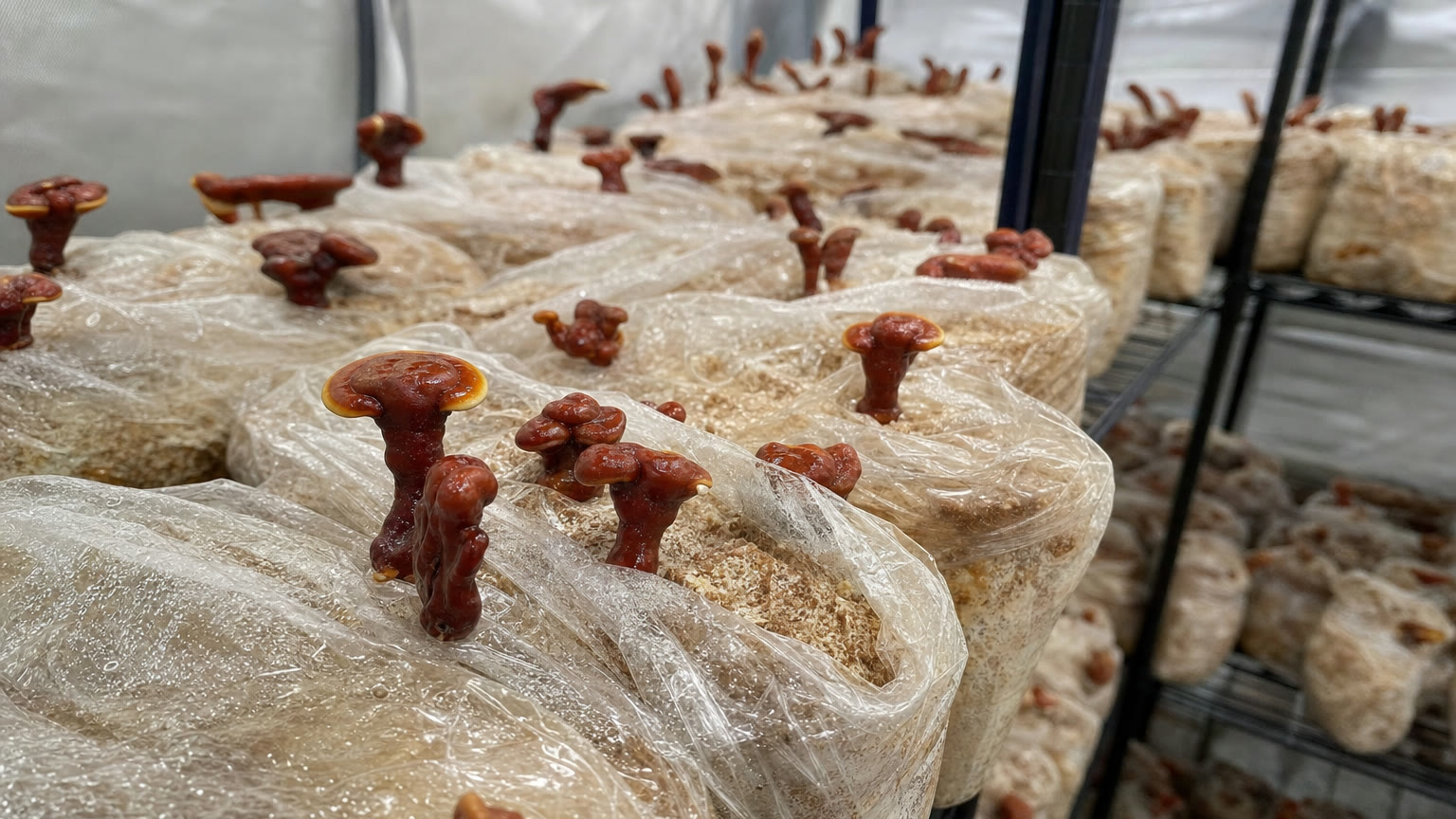
Reishi is a very different project from oyster mushrooms or lion’s mane. Instead of soft clusters you pick within days, it produces a hard, woody fruit body with a glossy, lacquered surface in shades of red, brown and orange. It grows slowly and asks for patience, but it also rewards that patience with striking fruit bodies that can keep for a very long time once dried. For many home growers, reishi becomes the long-term project that runs quietly in the background while faster species come and go.
Here are the basics you need to grow reishi successfully at home, from substrate to harvest and drying.
What makes reishi different
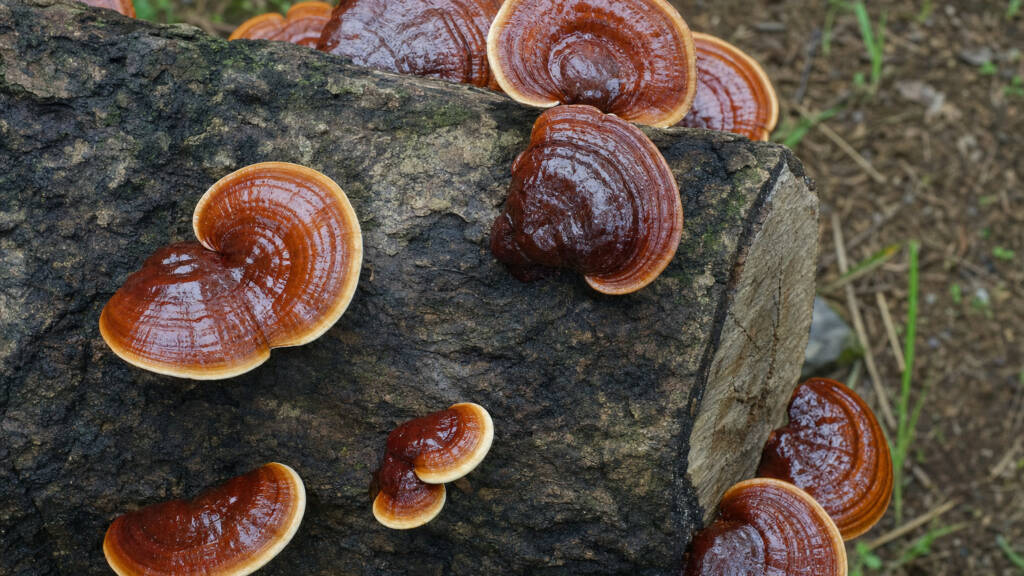
Reishi belongs to the genus Ganoderma, a group of wood-decaying fungi. In nature it grows on hardwood stumps and logs, and in cultivation it does best on hardwood as well. The fruit body forms as a firm, shelf-like conk, often kidney shaped, with a shiny upper surface and a pale underside full of tiny pores.
Its pace is the first thing to plan around. Colonization of a sawdust block can take several weeks, and fruiting itself can stretch over a couple of months. Reishi is also tough rather than tender, so it is dried and stored instead of being cooked fresh the way most gourmet mushrooms are.
Substrate: hardwood blocks or logs
Most home growers fruit reishi from supplemented hardwood sawdust blocks. Hardwoods such as oak and maple are common choices. The sawdust is usually mixed with a supplement, such as wheat bran, then sterilized before inoculation to give reishi a clean start.
Logs are the other traditional option. Freshly cut hardwood logs are inoculated with plug or sawdust spawn and left to colonize, often outdoors or in a protected shady spot. Log cultivation is slower to produce, but a well-colonized log can fruit for several years, which makes it a rewarding project if you have the space.
Whichever method you choose, give the mycelium time to fully colonize before trying to fruit. A block that is pushed into fruiting too early is more likely to stall or develop contamination.
Fruiting conditions shape the mushroom
Reishi responds strongly to its environment, and you can see the effects in the shape of the fruit body. It prefers warm temperatures, generally from the mid-70s to mid-80s Fahrenheit, and high humidity during fruiting.
Carbon dioxide and fresh air are the main levers. In high carbon dioxide, reishi grows as upright, branching stalks often called antlers. With more fresh air exchange, those growing tips open out into the classic flat, rounded conk. Some growers deliberately keep reishi in antler form for a while before increasing airflow, while others aim for conks from the start. Either way, steady humidity and gentle, consistent airflow give the best results.
Light also influences growth. Reishi tends to grow toward a light source, so a consistent, indirect light from one direction helps keep fruit bodies shaped evenly. Rotating blocks occasionally can prevent lopsided growth.
When and how to harvest
The clearest harvest cue is the growing edge. While a reishi conk is still expanding, it has a white or pale yellow rim around the outer edge. When that rim disappears and the edge matches the color of the rest of the cap, growth has stopped and the fruit body is mature. At that point it is ready to harvest.
Cut the fruit body off at its base with a sharp knife or pruning shears, since reishi is too tough to twist free. Mature reishi often releases a fine brown spore dust that coats nearby surfaces. Many growers place reishi in its own area or cover nearby surfaces so the spores do not settle on other crops or equipment.
After harvest, the block may produce another, usually smaller, fruit body if conditions stay favorable. Logs can continue producing in later seasons.
Patience and record keeping
Because reishi takes so long, it is easy to lose track of what you changed and when. A simple log makes a big difference. Record the inoculation date, when colonization finished, when you moved the block into fruiting, the temperature and humidity you kept, and when the growing edge disappeared. Over a few grows, those notes show you how your space affects reishi and which conditions give you the shape you prefer.
Once established, reishi is less prone to sudden failure than faster species, but it is exposed to contamination for a longer time. Keep the fruiting area clean, remove any blocks that show green or black mold, and avoid disturbing growing fruit bodies more than necessary. Touching the soft growing edge can leave marks that stay on the finished conk.
Many growers run reishi alongside faster species such as oysters, so there is always something to harvest while the reishi develops. That rhythm keeps the hobby rewarding while you wait, and by the time your first reishi conk is ready, you will have several oyster harvests and a much better feel for your grow space behind you.
Drying and storing reishi
Because fresh reishi becomes extremely hard once it dries, it is easiest to slice it while it is still fresh. Cut it into thin strips or small pieces with a sturdy knife, then dry the pieces thoroughly in a dehydrator on a low setting or in a warm, well-ventilated area. The pieces are done when they are completely dry and hard throughout.
Store dried reishi in airtight containers in a cool, dry, dark place, and label each container with the harvest date. Properly dried reishi keeps for a very long time, which is part of its appeal for growers who enjoy building up a stock over several seasons.
Reishi asks for patience, warm humidity and plenty of time, but it is one of the most rewarding species to watch develop. If you are new to cultivation, our beginner mushroom growing guide covers sterile technique and colonization basics that apply here too, and you can Shop cultures and spawn to start your first reishi project.


Add Comment