
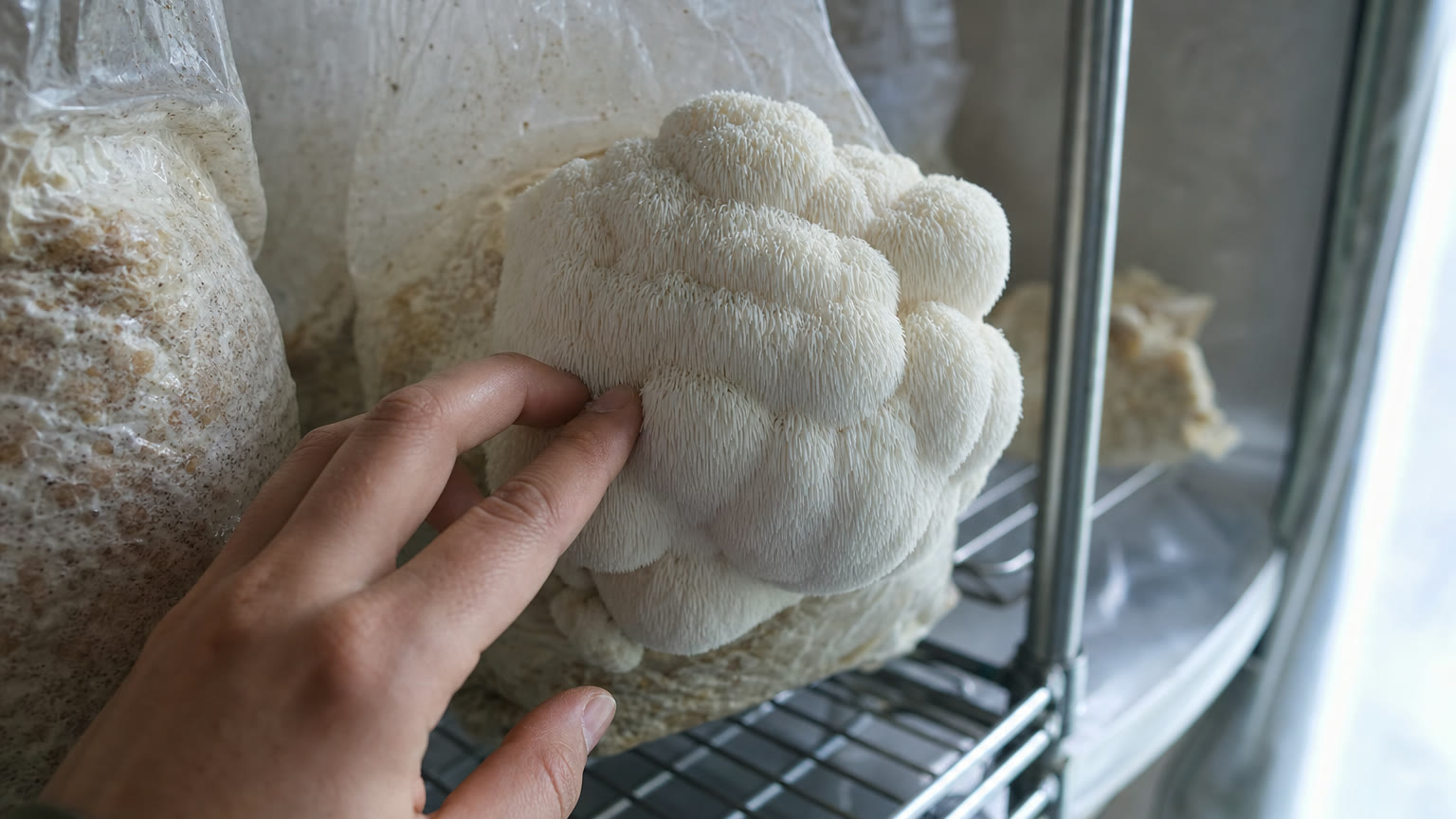
Lion’s mane does not look like a typical mushroom. Instead of a cap and gills, it grows as a white, rounded mass covered in soft, hanging spines. That unusual shape is part of its appeal, and it also means the usual harvest cues, like a cap flattening out, do not apply. Knowing exactly when to cut lion’s mane is the single biggest factor in how it tastes and how long it keeps.
Here is what to watch for from the first pin to the moment you pick, and what the fruit body is telling you if something looks off.
How lion’s mane develops on the block
Lion’s mane (Hericium erinaceus) usually starts as a small, firm white knob pushing out of a cut or hole in the grow bag. Over the next several days it swells into a dense lump, and fine bumps appear across the surface. Those bumps lengthen into the spines that give the mushroom its name.
Most growers fruit lion’s mane in the low 60s to around 70 degrees Fahrenheit, with high humidity and steady fresh air. In those conditions the whole process from first knob to harvest often takes one to two weeks, though strains and setups vary. The fruit body grows best when it can expand freely out of the bag opening, so give it room and avoid having it press against a wall or shelf.
The signs it is ready to harvest
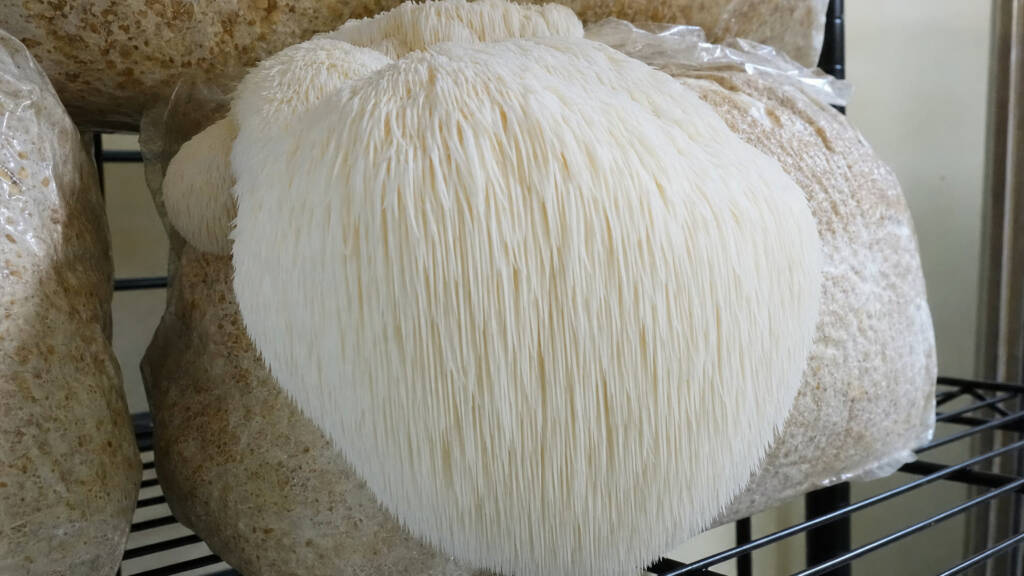
The most reliable sign is spine length. When the spines have grown to roughly a quarter to half an inch and hang down cleanly, the mushroom is at or near its peak. At this stage the whole fruit body is bright white, feels firm and slightly springy when you press it gently, and holds its shape well.
Watch the color closely as well. A clean, even white is what you want. Once you see the tips of the spines or the underside starting to turn yellow or tan, the mushroom is past its best. It is still edible at that point, but the texture becomes softer and the flavor can turn slightly bitter or sour. Many growers find the best results come from picking a day early rather than a day late.
A third clue is the release of spores. Lion’s mane drops a fine white spore dust onto whatever sits below it. If you notice a white film forming on the shelf or bag under the mushroom, it is maturing quickly and should be picked soon.
What different shapes and colors tell you
Lion’s mane is quite sensitive to its environment, and its appearance gives you useful feedback. If the surface looks dry, crusty or turns brown in patches, the air is too dry. Raise humidity and avoid pointing fans directly at the fruit body. If the mushroom forms long, branching, coral-like arms instead of a compact ball, carbon dioxide is usually too high, so increase fresh air exchange.
A pink or peach blush on the spines often shows up when the fruit body is exposed to cooler temperatures or strong light. It is common and usually harmless, though it is worth checking your conditions if it appears on every flush. Very short, stubby spines on a large mass can point to low humidity during development, while uneven growth often comes from airflow hitting one side harder than the other.
How to harvest without damaging the fruit
Lion’s mane bruises easily, and the spines mat down when handled roughly. Use a clean, sharp knife to cut the whole fruit body off at its base, as close to the block as you can, and hold it from underneath rather than squeezing the spines. Try not to leave a large stub behind, since leftover tissue can rot and invite contamination before the next flush.
Once harvested, brush away any substrate rather than rinsing. Lion’s mane soaks up water like a sponge, and a wet mushroom spoils quickly and cooks up soggy. Store it in a paper bag in the refrigerator and plan to use it within several days. A fresh, firm fruit body that squeaks slightly when pressed is at its best in the pan.
Cooking freshly harvested lion’s mane
Fresh lion’s mane has a mild, slightly sweet flavor and a texture that many cooks compare to crab or lobster when it is browned well. The key is handling its water content. Tear or slice the fruit body into thick pieces, then cook them in a dry pan over medium heat first, pressing gently with a spatula so the mushroom releases its moisture. Once the pan is dry, add butter or oil and let the pieces brown on each side.
Thick slabs of lion’s mane can be seared like a steak, while torn pieces work well in pasta, stir-fries and soups. Because its flavor is delicate, simple seasoning works best: salt, garlic, a squeeze of lemon and fresh herbs. Lion’s mane harvested at its peak is noticeably sweeter and firmer than one picked after it has started to yellow, which is one more reason to watch those spines closely. If you have more than you can cook in a few days, sauté the extra and freeze it in flat portions, or slice and dry it for soups.
Planning for the next flush
After the first harvest, most lion’s mane blocks can produce at least one more flush. Give the block a short rest, keep the conditions humid and the air moving, and watch for new knobs at the original opening or nearby. Later flushes are usually smaller, but they often come in faster since the mycelium is already established.
Keeping a simple log of when pins appeared, the temperature and humidity, and the day you harvested makes each round easier to time. Over two or three blocks you will learn exactly what your space produces and when. If you are planning your first lion’s mane grow, our beginner mushroom growing guide covers substrate preparation and fruiting setup in more detail. Ready to start? Shop cultures and spawn for your next block.

Add Comment