
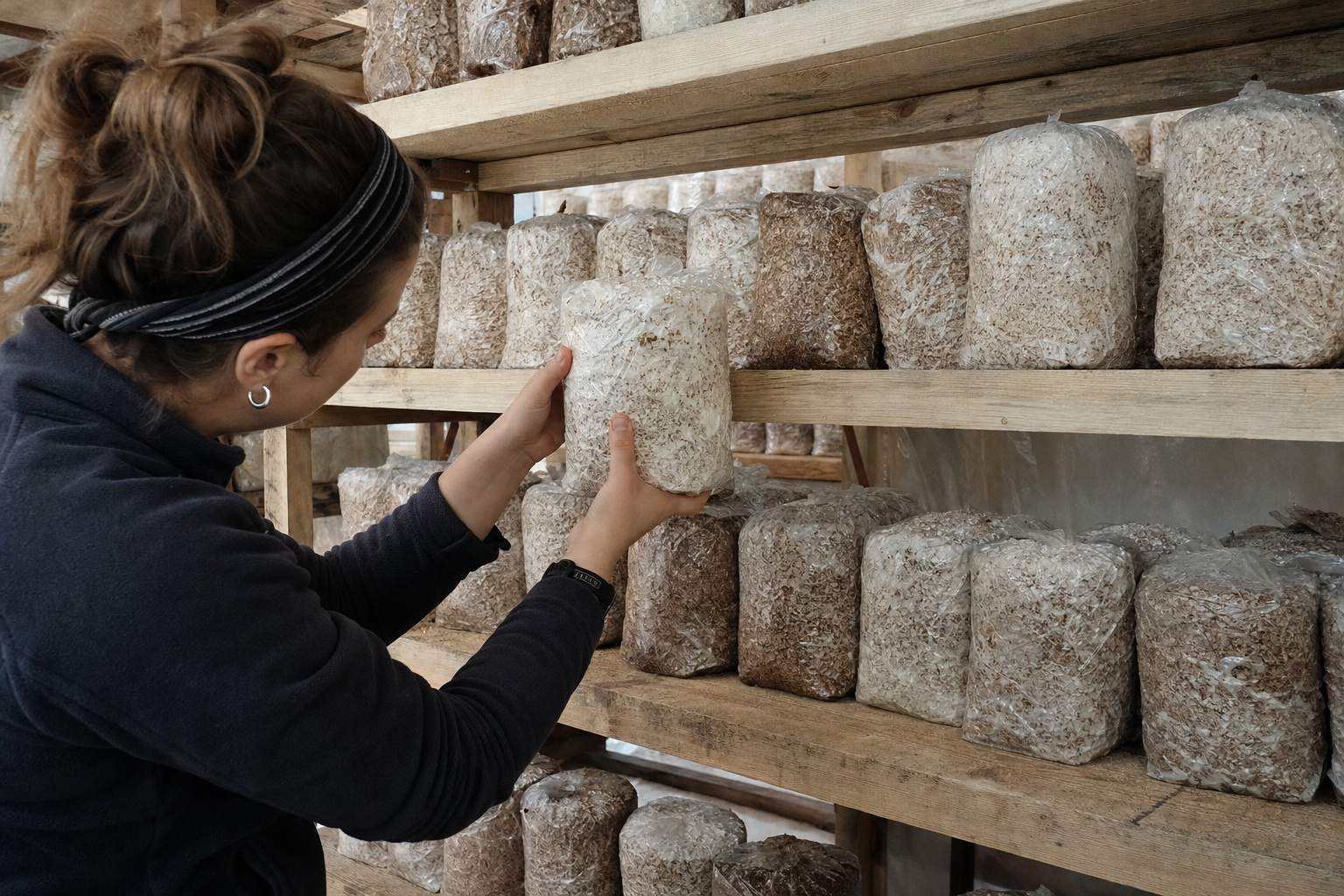
After inoculation, shiitake logs move into a period of colonization that can stretch across many months. The mycelium needs to establish itself fully through the wood before fruiting becomes possible. How well that happens depends heavily on where and how the logs are kept during that time.
What the Laying Yard Actually Is
The laying yard is the dedicated site where inoculated logs incubate and go on to produce mushrooms. In most setups, logs stay in the laying yard for the entirety of their productive life, through incubation, fruiting cycles, and harvest. Choosing the right location before logs go in matters, because moving them later is heavy work.
One early check worth building into your routine: look at the cut ends of the logs. Shiitake mycelium appears white and often slightly fluffy at the end grain. Seeing that growth is a useful sign that colonization is progressing.
Shade Is the Most Critical Site Factor
Year-round shade in the range of 75 to 100 percent is essential. Sun and wind pull moisture out of logs faster than most growers expect, and a log that dries out loses the mycelium working through it. Dense, consistent shade is the primary defense against that.
Canopy Options
- Coniferous forest canopy is the preferred option. Hemlock in particular provides especially dense, consistent shade through all seasons.
- Deciduous canopy works during the growing season but leaves logs exposed in winter. When relying on deciduous trees, an 80 percent shade cloth or pine boughs should cover the logs through the colder months.
- Structures such as the north side of a house or outbuilding can provide effective year-round shade for smaller operations in the right circumstances.
Access and Proximity
A laying yard that is difficult to reach becomes a problem quickly. Consider these practical factors when evaluating a site:
- Vehicle or tractor access makes moving logs far more manageable. Carrying heavy logs by hand over any real distance adds up fast.
- Proximity to electricity matters during inoculation, which requires a drill and, typically, a wax setup nearby.
- Distance from your home or farm affects how often you will realistically check on the logs during the growing season.
Water: Moisture Maintenance and Fruiting
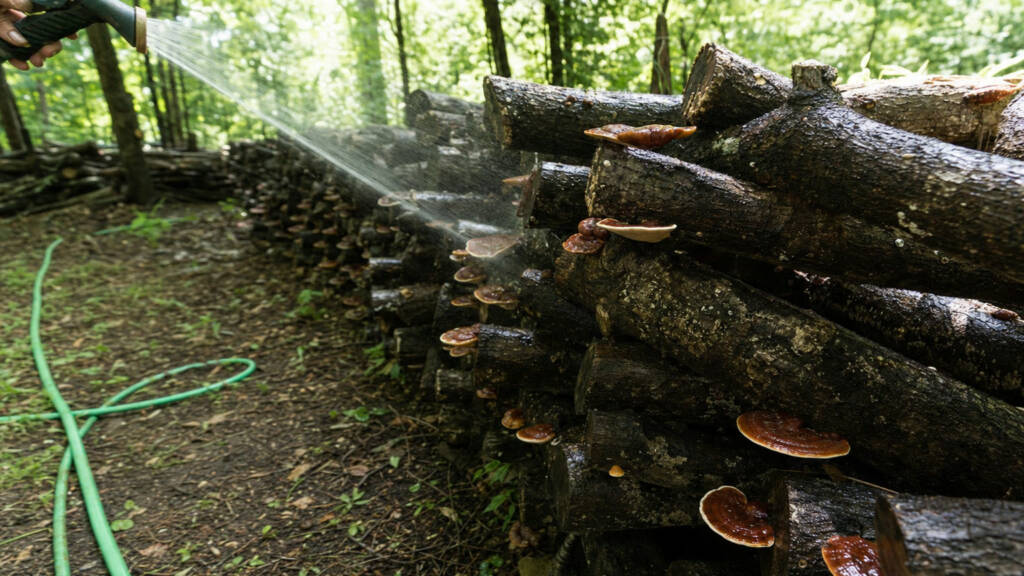
Water access is not optional. Logs need moisture maintained above a minimum threshold throughout incubation and beyond. They typically start with a moisture content around 40 to 45 percent and should not drop below 30 percent. If a dry spell sets in, logs can be submerged for a few hours or wetted under a sprinkler for several hours to bring them back up.
Beyond routine moisture management, water is used for forced fruiting, also called shocking, where logs are soaked to trigger a flush. This works best when the water temperature is significantly cooler than the ambient air. In a woodland setting you cannot control air temperature, but you can prioritize access to a clean, cold water source: a well, stream, or public water system are all workable options.
Slope, Microclimate, and Wind Exposure
The physical characteristics of the site shape how you arrange and maintain the logs. A few considerations worth thinking through:
- Wind exposure accelerates moisture loss. On a windy site, stacking logs closer together helps retain humidity around them. Planting a windbreak is a longer-term option worth considering for exposed locations.
- Slope affects how logs can be arranged. On a steep slope where level ground is not available, traditional stacking methods designed for hillside incubation, such as the Japanese hill stacking approach, can keep logs stable and workable.
- Microclimate varies even within a small property. Pockets that hold more moisture, stay cooler, or receive less direct wind can make meaningfully better laying yards than spots just a short distance away.
Putting It Together Before Inoculation
The time to evaluate and prepare the laying yard is before the logs are inoculated, not after. Once logs are drilled, plugged, and waxed, the focus should shift to colonization, not site prep. A well-chosen yard with reliable shade, a nearby water source, and reasonable vehicle access removes a significant amount of friction from every step that follows, right through to harvest.
If you are working through the specifics of shiitake cultivation and want more context on the species itself, the MycoStock shiitake growing guide covers the broader picture of what makes this species worth the effort.
Add Comment