Mushrooms are fungi, not plants, and they grow differently from anything else in a garden. Instead of seeds, they reproduce through microscopic spores that develop into a network of threadlike cells called mycelium. That mycelium colonizes a nutrient source, a substrate, breaking it down and absorbing nutrients until conditions trigger fruiting. The mushrooms you harvest are the fruiting bodies of that mycelial network, in the same way an apple is the fruit of a tree.
The four stages every cultivator moves through
Regardless of species or starting material, home cultivation follows the same sequence:
- Inoculation, introducing a mushroom culture to a substrate
- Colonization, waiting for mycelium to spread through that substrate
- Fruiting, providing humidity, fresh air, and light to trigger mushroom formation
- Harvesting, picking the mature fruiting bodies
Each species has slightly different requirements, but the fundamental process is the same whether you are growing oyster mushrooms, lion’s mane, or shiitake. The three starting materials below, liquid cultures, grain spawn, and fully colonized fruiting blocks, each drop you into a different point in that sequence.
Fully colonized fruiting blocks: start at fruiting
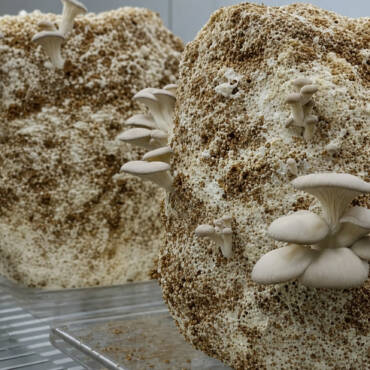
A fully colonized fruiting block or grow kit arrives with the mycelium already established. The colonization work is done. Your job is to provide humidity and fresh air to trigger fruiting and then harvest. This makes fruiting blocks a straightforward way to focus your first project on the final stages of the cycle, without performing inoculation or managing colonization yourself.
Grain spawn: start at colonization
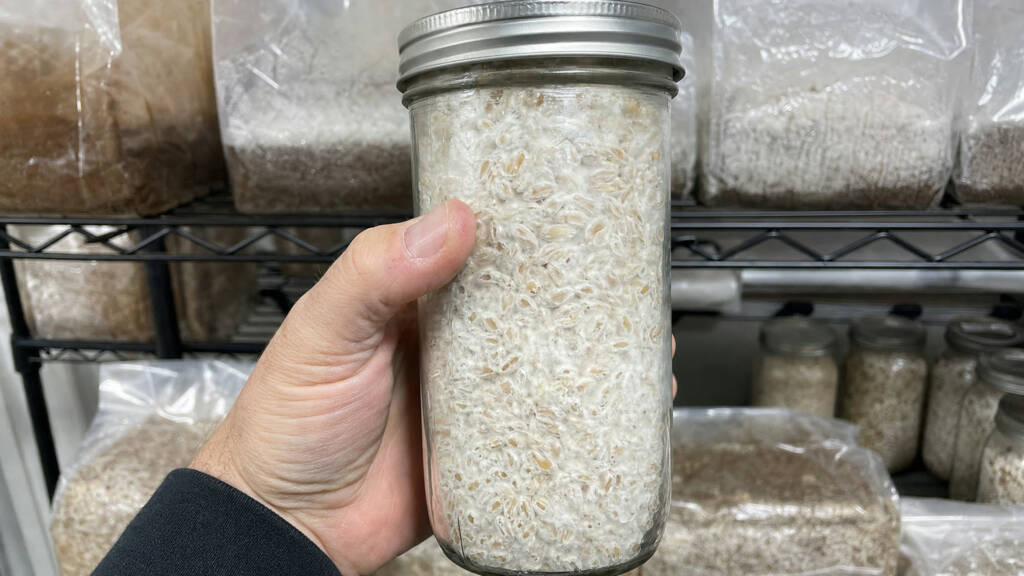
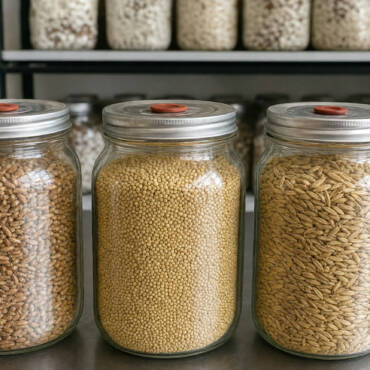
Grain spawn is sterilized grain (rye, wheat and millet are common examples) that has been colonized by a mushroom culture. Each individual grain acts as a distribution point. When you mix grain spawn into a bulk substrate, those colonized grains become starting points from which mycelium spreads, allowing fast and even colonization through the new material. Starting with grain spawn means you are responsible for that mixing step and the colonization period before fruiting begins.
Liquid culture: start at inoculation
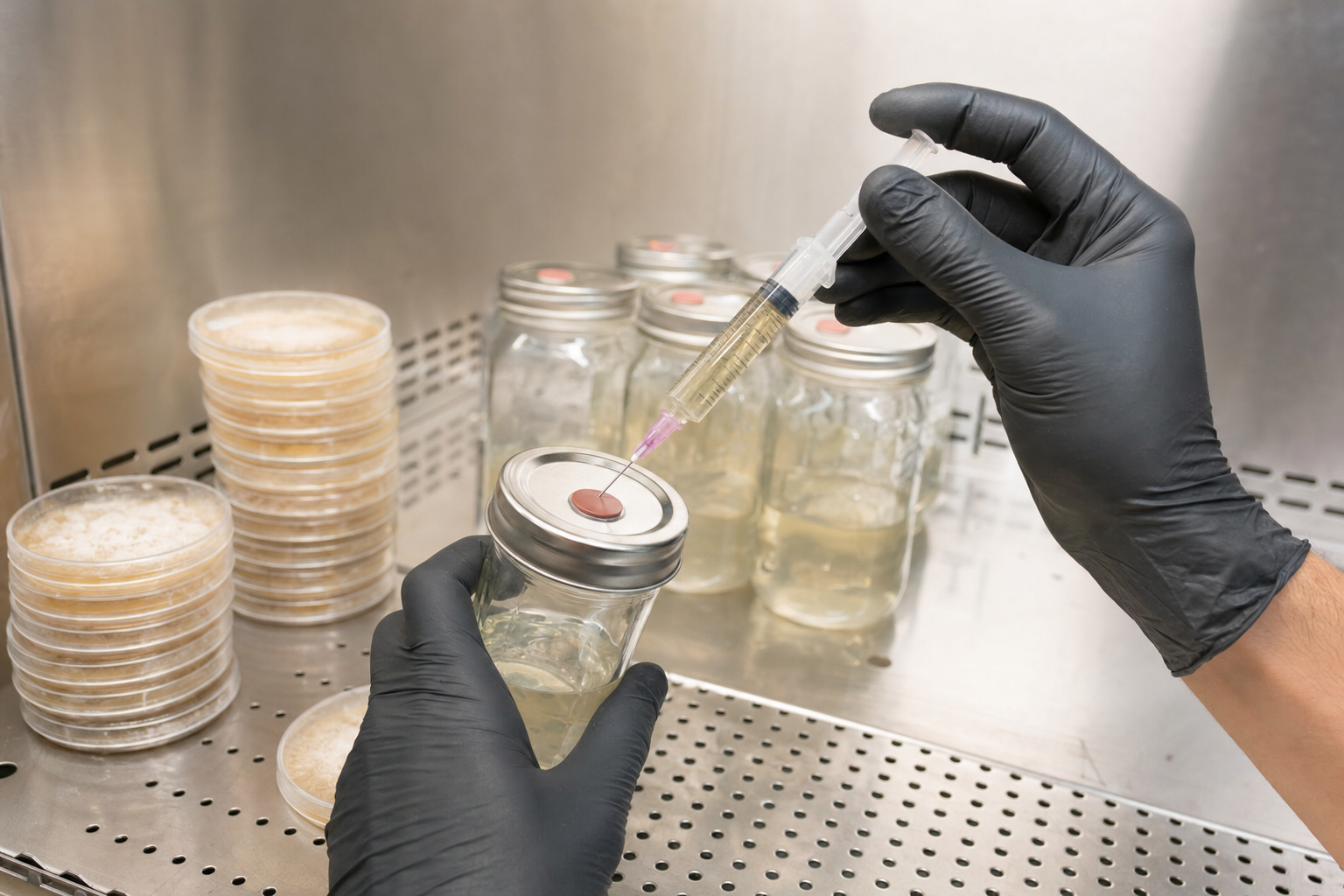
Liquid culture carries living mycelium suspended in liquid form. It is used to inoculate grain jars, agar plates, or all-in-one bags. Starting here puts you at the earliest practical stage of the cultivation cycle. You introduce the culture, manage colonization, and then move into fruiting. All-in-one bags, which combine sterilized grain and substrate in a single container, are a common pairing with liquid culture because they walk you through the full cycle from inoculation to harvest in one vessel.
Matching the starting material to your goals
The simplest question to ask is: which stages do you want to handle yourself?
- If you want to focus on fruiting and harvesting first, a fully colonized block is a direct path to that experience.
- If you want to practice colonization and learn how mycelium spreads through bulk substrate, grain spawn gives you that stage to work through.
- If you want to run the full cultivation cycle from inoculation forward, liquid culture is your starting point.
None of these paths is inherently better. They represent different entry points into the same process, and many growers eventually work with all three as their skills develop. For a deeper look at how these materials fit into the full growing cycle, MycoStock’s mushroom cultivation resources cover the details behind each stage.
Add Comment