
Substrate is the foundation of every mushroom grow. Before you inoculate a single bag or block, understanding what your chosen species actually needs from its substrate will save you a lot of frustration down the line. Not all substrates are equal, and not all species are flexible. Getting this pairing right is one of the clearest ways to improve consistency across flushes.
What Substrate Actually Does
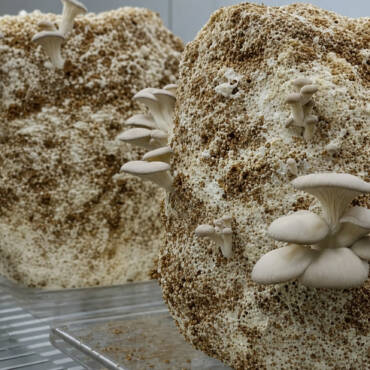
Mycelium does not create nutrients out of thin air. It digests what it is given. A substrate is essentially a food source, structured to hold moisture and allow gas exchange while the mycelium colonizes it. The composition of that substrate determines how quickly colonization happens, how dense the mycelial network becomes, and ultimately how well the fruiting block performs when conditions shift.
Beyond nutrition, substrate texture and particle size affect how oxygen moves through the mass. Mycelium needs oxygen during colonization, and a substrate that is packed too tightly or retains too much free water will restrict that exchange and invite contamination before the culture ever gets a foothold.
The Main Substrate Categories
Hardwood-Based Substrates
Hardwood sawdust, typically oak or a similar dense hardwood, is the go-to base for species like lion’s mane, shiitake, and maitake. These species evolved to break down lignin-rich wood, so a hardwood substrate gives their enzymes something to work with. Supplemented hardwood blocks, sawdust mixed with wheat bran, oat bran, or another nitrogen source, push yields higher but also raise the risk of contamination if sterilization is incomplete. For that reason, fully supplemented blocks need autoclave-level sterilization, not just pasteurization.
Straight hardwood sawdust with no supplementation is more forgiving and can sometimes be pasteurized rather than sterilized, depending on the species and inoculation method. The trade-off is a somewhat lower ceiling on yield.
Straw
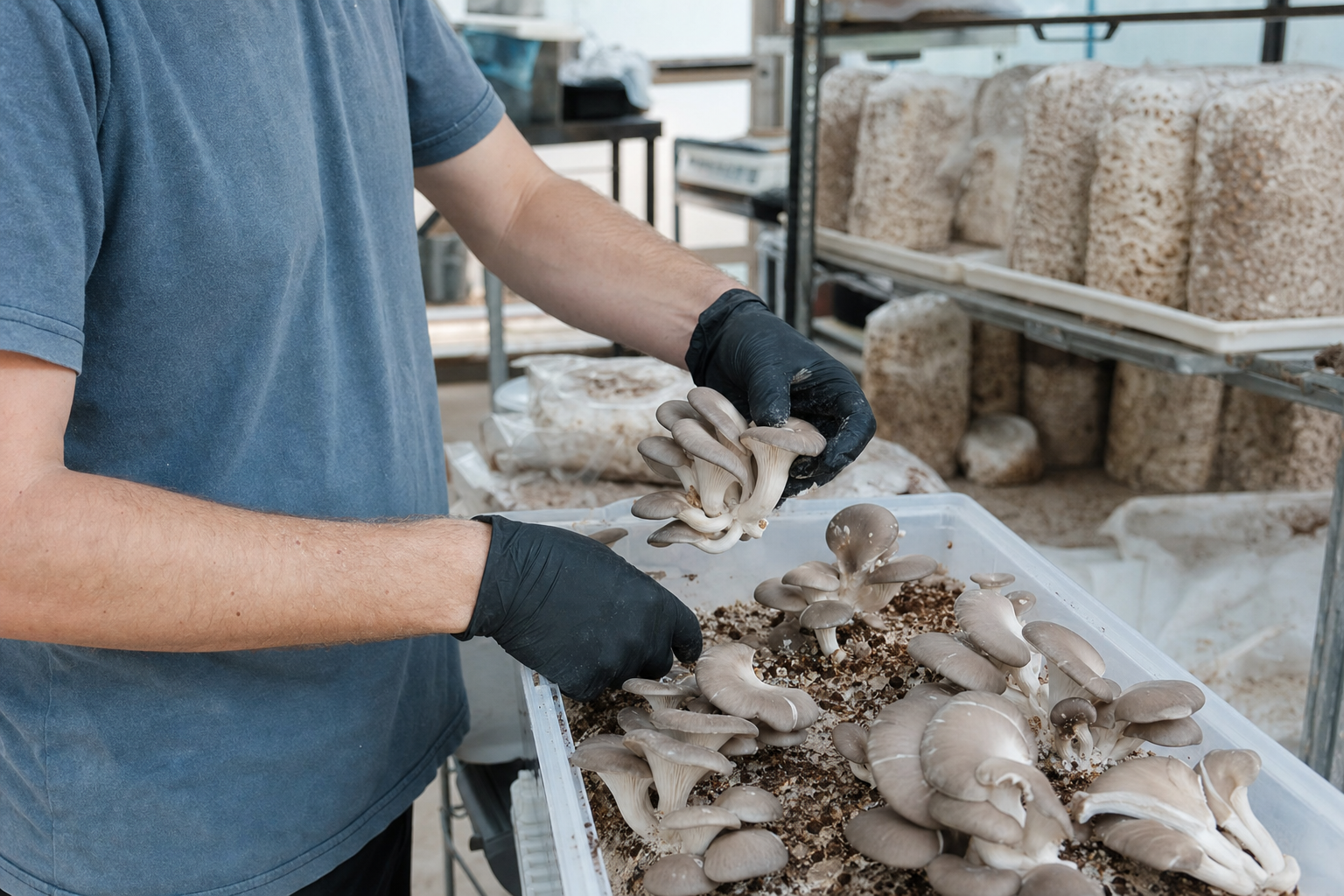
Wheat straw and rye straw are the standard choices for oyster mushrooms. Oysters are aggressive colonizers that produce enzymes that efficiently break down the lignin, cellulose and hemicellulose in straw. Because oysters colonize so quickly, straw can usually be pasteurized rather than fully sterilized, the speed of colonization helps outcompete contaminants under pasteurization conditions.
Straw holds moisture well and allows reasonable gas exchange when packed loosely, both of which suit the high-moisture, high-fresh-air-exchange demands of oyster cultivation. It is also widely available and relatively easy to work with at small scale.
Grain Spawn
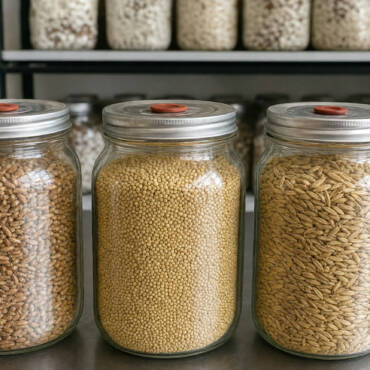
Grain is used as spawn, not as a primary fruiting substrate, but it is worth understanding why. Rye berries, wheat berries, millet, and similar grains provide a high-nutrient environment that allows mycelium to build strong, dense inoculum quickly. That inoculum is then used to colonize a bulk substrate. Because grain is so nutritious, it is extremely susceptible to contamination and must be fully sterilized. Even a small amount of residual contamination in grain spawn can wipe out a batch when introduced to a bulk substrate.
Coco Coir and Vermiculite Blends
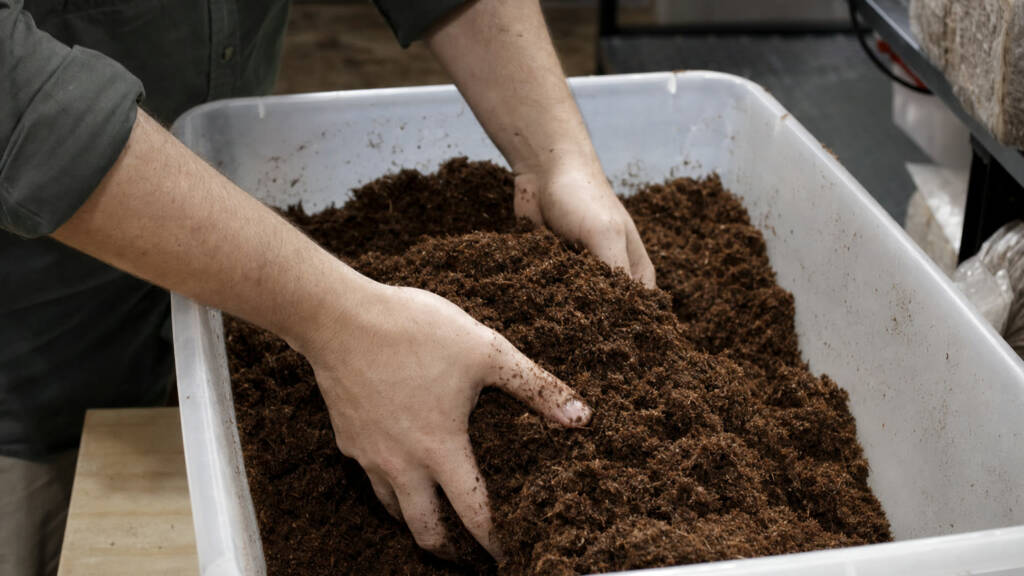
A blend of coconut coir and vermiculite is a lower-nutrient option used for certain species and for casing layers. It holds moisture evenly, drains well enough to prevent waterlogging, and its low nutrient content means it is less hospitable to competing molds. It does not offer the food value of hardwood or straw, so it works best as a casing material or for species that tolerate leaner growing conditions rather than as a primary substrate for high-yield gourmet varieties.
Moisture Content: Getting It Right Before You Seal the Bag
Moisture content is one of the most common points where substrate preparation goes wrong. The target for most hardwood and straw substrates is roughly 60 to 65 percent moisture by weight, sometimes described as the field capacity test, where a firmly squeezed handful produces only a few drops of water. Too dry and mycelium struggles to colonize. Too wet and the substrate becomes anaerobic, which creates conditions that favor bacteria and other unwanted organisms over mycelium.
It is worth testing your water source and your hydration method consistently rather than estimating by feel each time. Repeatability matters more than hitting a precise number on any single batch.
Sterilization vs. Pasteurization
The sterilization versus pasteurization decision follows directly from substrate composition. Higher-nutrient substrates carry a higher contamination load and need sterilization, typically pressure cooking at 15 PSI for a period long enough to reach the center of the substrate mass. Lower-nutrient substrates can often be pasteurized at lower temperatures for shorter periods, which preserves some of the beneficial microbial life that can actually compete against unwanted molds.
Supplemented hardwood blocks always need sterilization. Straight straw for oysters can usually be pasteurized with lime, hot water, or a steam method. Grain spawn always needs sterilization. These are not interchangeable approaches, using pasteurization where sterilization is required is one of the most reliable ways to produce contaminated blocks.
Matching Species to Substrate
- Oyster mushrooms (Pleurotus spp.): Straw is the primary choice. Supplemented hardwood works and can increase yields, but straw is forgiving and effective.
- Lion’s mane (Hericium erinaceus): Hardwood sawdust, lightly supplemented. Lion’s mane tends to be more sensitive to contamination than oysters, so sterilization discipline matters.
- Shiitake (Lentinula edodes): Hardwood sawdust, often with wheat bran supplementation. Shiitake mycelium colonizes more slowly than oysters, which makes sterilization especially important.
- King oyster or trumpet royale (Pleurotus eryngii): Hardwood or a hardwood-straw blend. King oysters tolerate a range of substrates but tend to fruit better on denser, more nutritious mixes.
- Chestnut mushrooms (Pholiota adiposa): Hardwood-based substrates, supplemented. Similar requirements to shiitake in terms of substrate density and sterilization.
Starting with Verified Genetics
Even a perfectly prepared substrate cannot compensate for weak or contaminated starting genetics. The liquid culture or grain spawn you inoculate with sets the ceiling for everything that follows. A culture that is slow to colonize, prone to producing off-morphology growth, or already carrying contamination will not perform well regardless of how carefully the substrate was prepared.
If you want to understand more about the varieties suited to home and small-scale cultivation, the guide to locally grown mushroom varieties covers some of the gourmet species worth growing and what makes each one distinct.
A Few Practical Notes
- Keep detailed records of substrate formulations and hydration weights so you can reproduce results and troubleshoot failures with real data.
- Weigh your supplements rather than estimating by volume, bran in particular compresses unevenly, and volume measurements are not reliable.
- Allow sterilized or pasteurized substrate to cool fully before inoculation. Introducing culture to hot substrate kills it; introducing it to warm substrate invites contamination.
- Work in the cleanest environment you can manage at the point of inoculation, substrate preparation creates the opportunity, but inoculation is where contamination most often enters.
Getting substrate selection and preparation right is not complicated, but it does require consistency. The growers who see reliable results across multiple flushes are almost always the ones who have standardized their substrate process and stopped improvising from batch to batch.
Add Comment