
One of the first decisions a home grower makes, and one of the most consequential, is which species to start with. Pick one that fits your setup and you are set up to learn quickly. Pick one that fights your conditions and you will spend more time troubleshooting than harvesting.
Below is a straightforward breakdown of the gourmet species most commonly grown at home, what they need, and where they tend to trip people up.
Oyster Mushrooms: The Beginner’s Workhorse
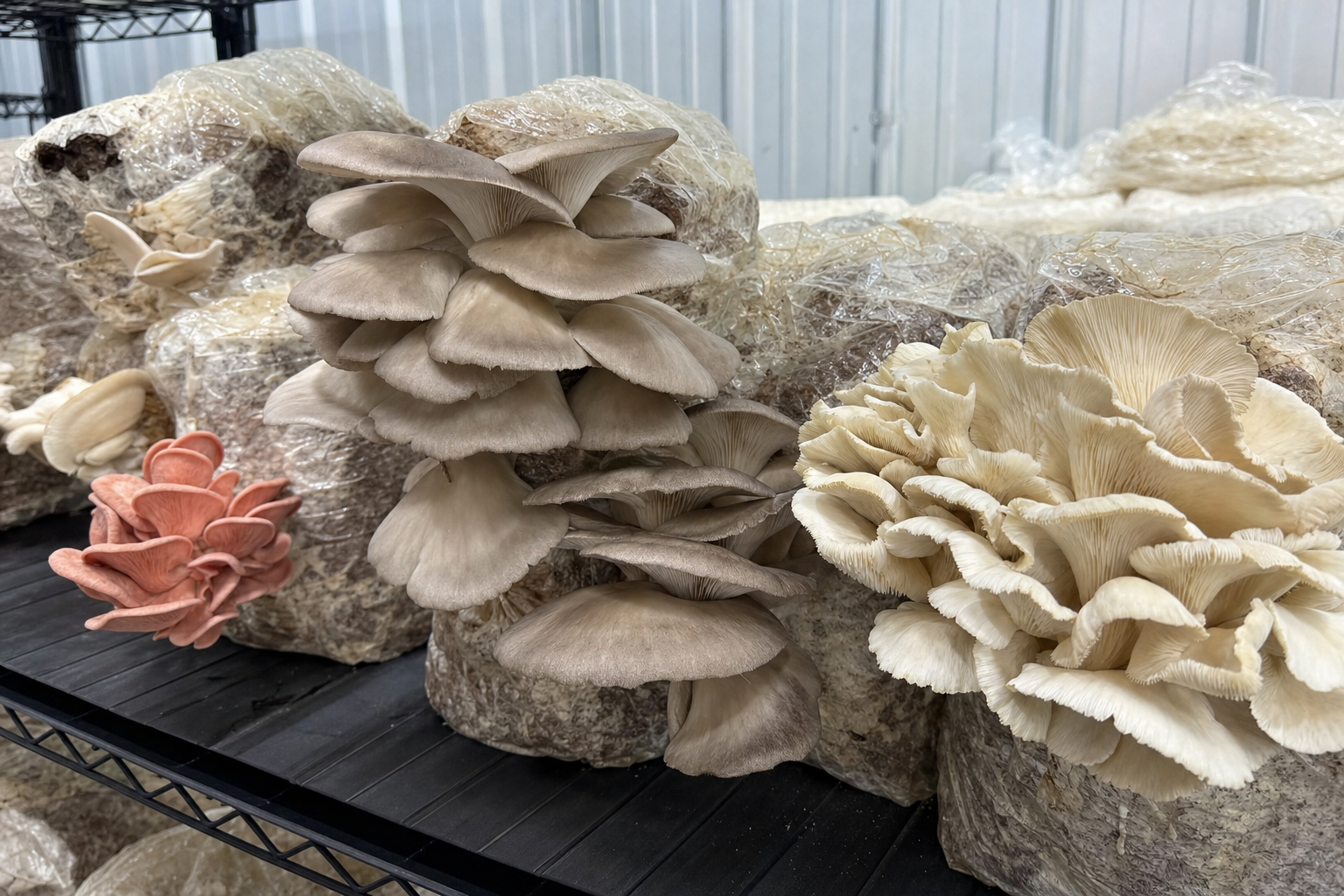
Pearl oyster (Pleurotus ostreatus) and its close relatives are the species most cultivators touch first, and for good reason. They colonize fast, tolerate a wider humidity range than most gourmet varieties, and fruit aggressively on a broad set of substrates, straw, hardwood sawdust, and supplemented blocks alike.
Within the oyster family there is real variation worth understanding:
- Pearl oyster fruits well at cooler temperatures, typically in the 55 to 65 °F range, making it well suited to unheated spaces in autumn and winter.
- Blue oyster is similar in temperature preference and tends to produce large, dense clusters.
- Pink oyster (Pleurotus djamor) wants warmth, 70 °F and above, and fruits extremely fast, but it has a very short shelf life after harvest.
- Golden oyster (Pleurotus citrinopileatus) also prefers warm conditions and produces striking yellow caps, though it is sensitive to over-humidity late in fruiting.
If your grow space runs warm in summer and cool in winter, matching the right oyster variety to the season makes the difference between consistent flushes and stalled blocks.
Lion’s Mane: High Reward, Specific Conditions
Hericium erinaceus is increasingly popular with home growers who want a species that looks and tastes genuinely different from anything at the grocery store. The cascading white teeth are striking, and the flavor, often compared to seafood, makes it a culinary standout.
Lion’s mane is not particularly difficult, but it is specific about a few things:
- It prefers cooler fruiting temperatures, generally 60 to 70 °F.
- It is sensitive to CO2. Without adequate fresh air exchange, the fruiting body elongates into spindly tendrils rather than forming the full, rounded pompon shape most growers are after.
- High humidity is important during pinning, but the surface of the fruiting body should not sit in standing moisture or it will brown quickly.
Genetics matter more with lion’s mane than with oysters. A strain that fruits reliably and holds its shape under typical home conditions performs very differently from one selected for something else entirely.
Shiitake: Slower, but Worth the Wait
Lentinula edodes is one of the most widely grown mushrooms in the world, and it is entirely achievable for home growers, but it runs on a longer timeline than oysters or lion’s mane.
A few realities to plan around:
- Shiitake prefers hardwood, oak sawdust supplemented blocks are standard, and colonization is slow, often six to twelve weeks before the block is ready to fruit.
- Many strains require a cold shock or a period of cooler temperatures to trigger pinning. Without this, a fully colonized block may simply sit.
- Once fruiting begins, caps should be harvested before the veil under the cap fully tears. The quality difference between a just-right harvest and an over-mature one is noticeable.
Strain selection matters here too. Warm-weather and cool-weather shiitake strains have meaningfully different fruiting temperature ranges, so matching the strain to your environment is worth thinking through before you start.
King Trumpet: A More Demanding Grow
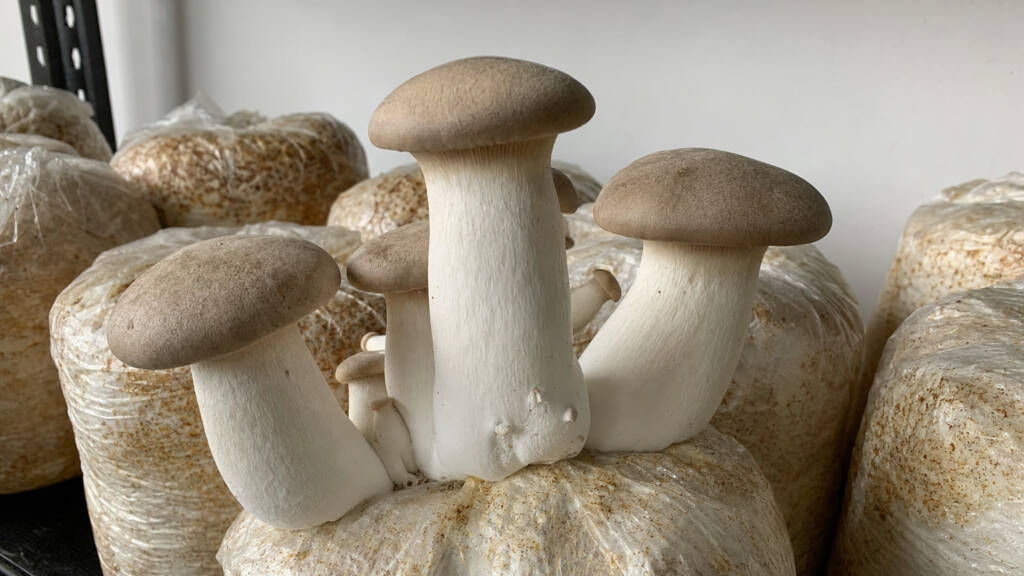
Pleurotus eryngii, sometimes called king oyster, produces dense, meaty stems and small caps. It keeps exceptionally well after harvest compared to other gourmet varieties, which makes it attractive to growers supplying restaurants or farmers markets.
The trade-off is that it is less forgiving:
- It wants cooler fruiting conditions, often 55 to 65 °F, and does not perform well when temperatures climb above 70 °F during fruiting.
- It requires very high CO2 during early development, counterintuitively, restricted fresh air exchange during pinning encourages the long, thick stem form that makes this species culinarily valuable.
- Colonization is slower than oysters, and contamination pressure is higher on supplemented substrates.
Most growers tackle king trumpet after gaining some experience with oysters or shiitake. The learning curve is real, but the species has qualities that make it a favorite for anyone growing beyond the hobby level.
Matching the Variety to Your Setup
The single most useful thing to do before choosing a species is to honestly assess your grow space:
- What is the temperature range, and can you control it?
- Can you manage humidity and fresh air exchange independently?
- How much time do you have for daily maintenance?
- Are you growing for your own kitchen, or do you have an outlet for larger volumes?
A pink oyster on a warm spare room shelf and a shiitake block in a temperature-controlled chamber are both valid home grows, they just need different things from you.
For a broader look at the species available to home cultivators and how they compare in practice, the popular mushroom varieties for home growers page goes deeper on the options worth considering.
Why Genetics Are Part of the Equation
It is worth saying plainly: the strain you start with affects everything downstream. Two lion’s mane cultures labeled identically can behave very differently in colonization speed, fruiting trigger sensitivity, and final yield. The same is true across every species listed here.
Performance-documented genetics, cultures that have been tested and observed under real conditions, give you a meaningful starting point. They do not eliminate the learning curve, but they remove one major variable so that when something goes wrong, you have a better chance of diagnosing the actual cause.
Choosing a species is just the beginning. Choosing a reliable strain of that species is what actually determines how your first grow goes.
Add Comment