
Why Humidity Is Not Just One Number
Most new growers treat humidity like a single target, pick a number, hit it, done. In practice, mushrooms need different moisture conditions depending on what stage they are in. Colonizing mycelium, pinning blocks, and fully fruiting clusters all respond to humidity differently. Treating every stage the same is one of the most common reasons growers get poor pin sets or cracked, hollow caps.
Understanding what humidity actually does, and when, is more useful than chasing a single percentage on a hygrometer.
What Humidity Does at Each Stage
Colonization
During colonization, the substrate itself holds most of the moisture the mycelium needs. Ambient humidity matters less at this stage than it does later, but extremely dry conditions can still pull moisture out of grain bags or blocks and slow growth. A moderate ambient humidity keeps substrate from drying out before the mycelium has finished its run.
Pinning
Pinning is where humidity becomes critical. Most gourmet species trigger pin formation in response to a combination of a drop in CO2, light, and a shift in relative humidity. Many cultivators raise humidity to 90 to 95 percent relative humidity during this window to encourage even, dense pin sets across the block surface. Letting humidity dip during pinning often means sparse or staggered flushes.
Fruiting
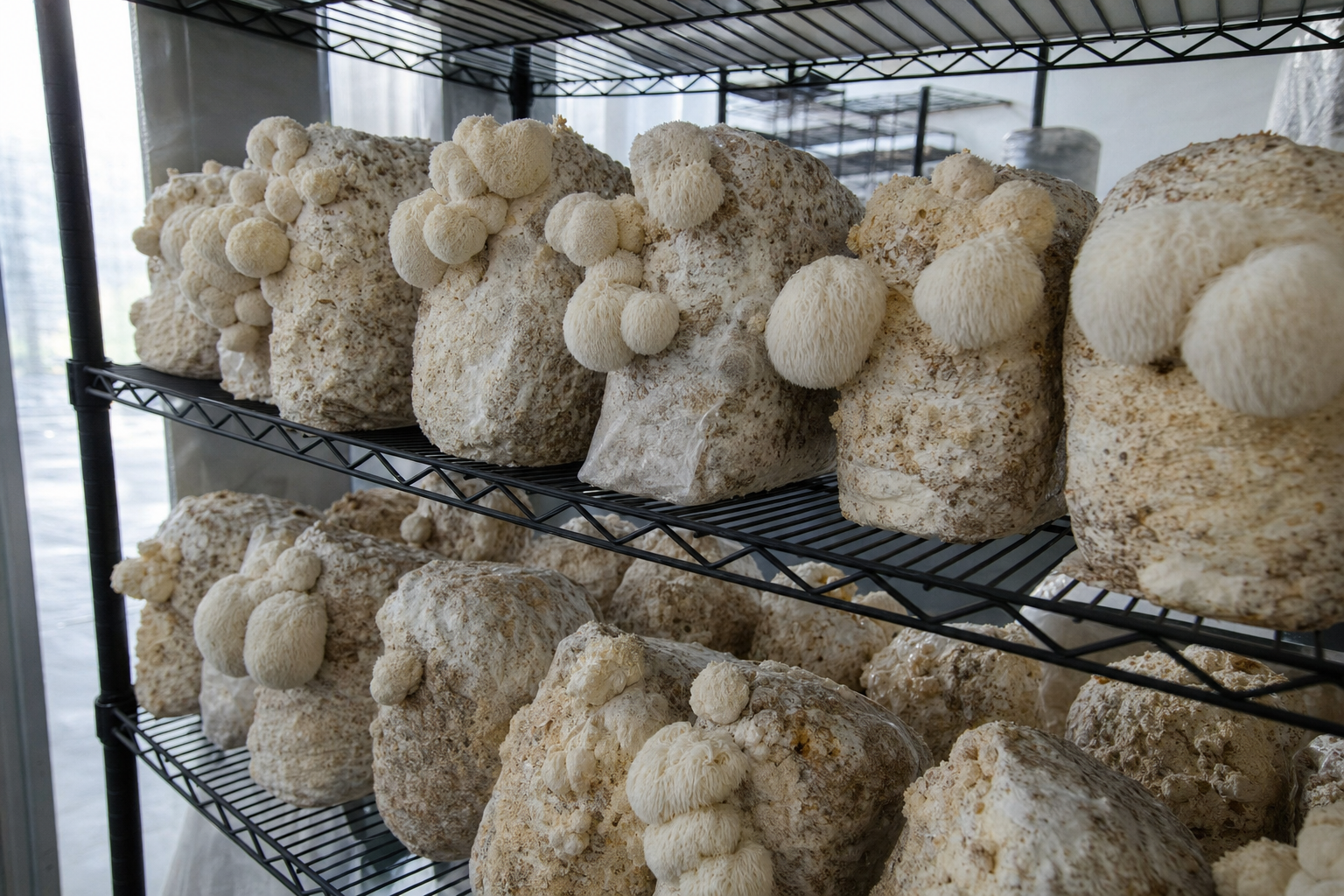
Once pins have formed and are developing into mature mushrooms, a slightly lower humidity range, often cited around 85 to 90 percent for many oyster and lion’s mane varieties, combined with adequate fresh air exchange gives caps room to develop without becoming waterlogged or aborting. The balance between humidity and airflow is the real skill here.
What Goes Wrong When Humidity Drifts
Both extremes cause problems, and they tend to show up in predictable ways.
- Too low: Caps crack, edges curl and dry out, pins abort before reaching harvest size, and substrate surfaces dry and harden. Lion’s mane tends to show browning on the tips early when conditions are too dry.
- Too high with poor airflow: Surface moisture pools, bacterial contamination becomes more likely, and CO2 builds up because growers compensate for high humidity by cutting fresh air exchange. The result is long, thin, leggy fruiting bodies with small caps.
The interaction between humidity and airflow is worth paying attention to. High humidity and good airflow together are very different from high humidity with stagnant air. The two variables have to be managed together, not independently.
Tools Growers Use to Manage Humidity
Ultrasonic Humidifiers
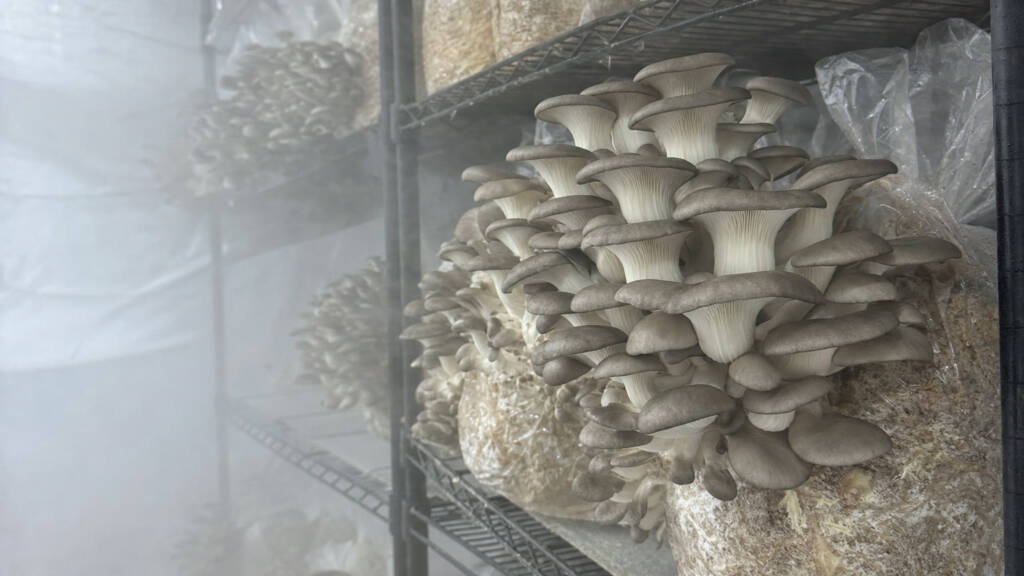
Ultrasonic humidifiers produce a fine cool mist and are a common choice for fruiting chambers and grow tents. They respond quickly and can be linked to a digital controller or timer. The tradeoff is that they deposit mineral residue over time if used with untreated tap water, which is why many cultivators use filtered or distilled water in them.
Foggers and Evaporative Systems
Pond foggers placed inside a reservoir and vented into a chamber are a lower-cost option. They work, but output is harder to dial in precisely compared to humidifiers with built-in controls.
Hygrometers and Controllers
A reliable digital hygrometer is non-negotiable for anyone growing more than a single block at a time. Plug-in humidity controllers, which switch a humidifier on and off based on a set threshold, take the guesswork out of manual monitoring and reduce the risk of humidity swings during overnight hours or when the grower is away.
Manual Misting
Hand misting with a spray bottle is a legitimate technique for small-scale fruiting chambers, especially for home growers running one or two blocks. The key is to mist the walls and surfaces of the chamber rather than the mushrooms directly. Misting caps directly encourages bacterial blotch and uneven development.
Species Differences Are Real
Humidity needs vary across species, and what works well for oysters may be too wet or too dry for reishi or shiitake. Oyster mushrooms are generally tolerant of a wide humidity range and recover well from brief dips. Lion’s mane is more sensitive to low humidity and will brown at the tips quickly. Shiitake requires a deliberate fruiting trigger that involves a humidity and temperature shift, often after a soaking period. Knowing the specific needs of the species you are working with matters more than following generic percentages.
If you want a closer look at which species suit different grow setups and experience levels, this overview of popular mushroom varieties for home growers breaks down the practical differences between common gourmet species.
Keeping Records Helps More Than You Think
Humidity is one of those variables that feels obvious in the moment but is easy to misremember after the fact. Growers who log their humidity readings alongside flush dates, pin density, and cap quality tend to spot patterns faster, what range produced the best results, when a dip correlated with a poor flush, or whether a new humidifier is actually performing the way the old one did.
A simple notebook or a basic spreadsheet does the job. The goal is to have data to look back at, not to create extra work.
One Variable Among Several
Humidity is important, but it does not work alone. Temperature, CO2 concentration, substrate moisture content, and the genetic quality of the culture you started with all interact with humidity to produce the final result. A well-documented, vigorous liquid culture or grain spawn will still underperform in a poorly managed fruiting environment. And a carefully controlled fruiting room will not rescue a weak or contaminated culture. Solid results come from getting all the variables into a reasonable range at the same time, and humidity is one of the more controllable ones once you understand what it is actually doing at each stage.

Add Comment